all content including images ©2007 chiflow.com and Gerald A. Sharp
All Content (text and images) ©2006 CHIFLOW.COM e-mail: chiflow@earthlink.net
|
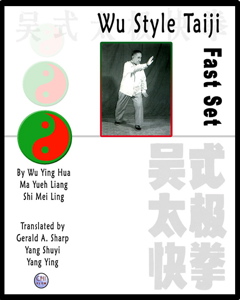
The first English translation of the Wu Style Taijiquan Fast Set book is now back in stock. This one-of-a-kind translation is based on the First edition by the Henan Publishing Company, and features Ma Yueh Liang in over 225 drawings. The Wu Style Taiji Fast Set is Wu Style's original form that was created by Wu Quan You, Wu Jian Quan's father, from his studies with both Yang Luchan and Yang Banhou, and which further served to develop both Wu's Long Form and the Wu Style System.
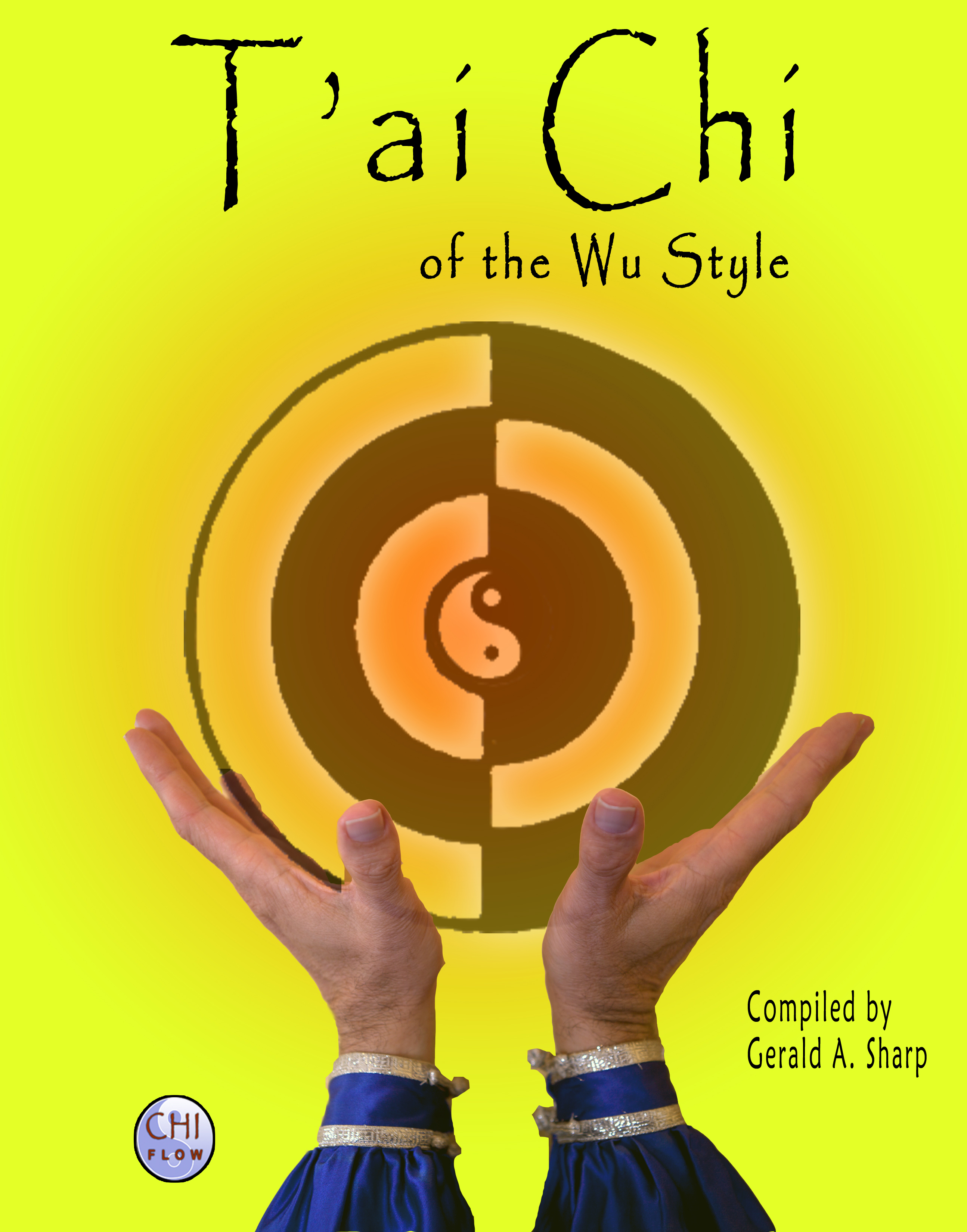
The writings of Ma Yueh Liang and Wu Ying Hua have not had the best possible translations into English, but, now available for the first time, T’ai Chi of the Wu Style compiles seven of Ma and Wu’s books into one of the most thorough to date on the Wu Style of T’ai Chi Ch’uan
There are books on Nei Jia Kung Fu, Hsing I Ch'uan, Pa Kua Chang and associated topics as translated by Joseph Crandall and successful collaborations between Gerald A. Sharp, Yang Ying, and Yang Shuyi.
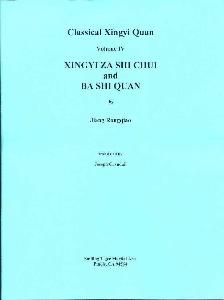
The Joseph Crandall translations of the Jiang Rong Qiao books in particular on the Xing I ('Motherfist'), Xing I ('Za Shi Chui and Ba Shi Quan') and Baguazhang, Practice Method are translations of true modern day classics on Nei Jia Kung Fu. They are important books and English translations are available here. The translation by Sharp, Yang, and Yang of the Wu Style Taiji Fast Set, as well as Sha Guozhen's Xing Yi: ('San Shou Pao') are also well received. These books are references that you'll want to keep in your personal library for years to come if you're interested in Nei Jia Kung Fu (Taiji, Hsing I, or Bagua).
|