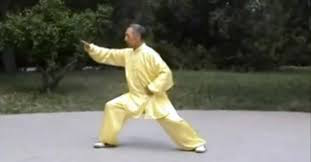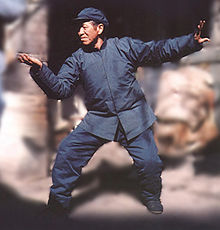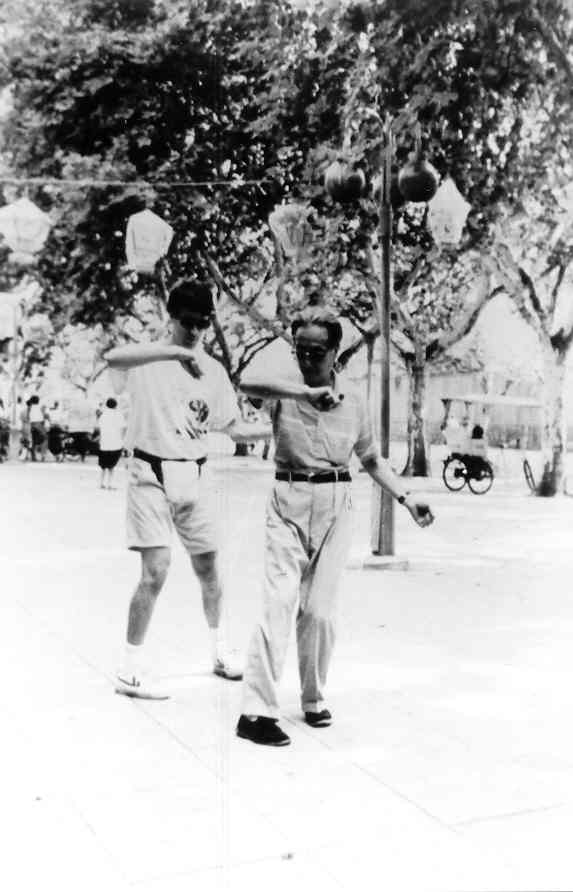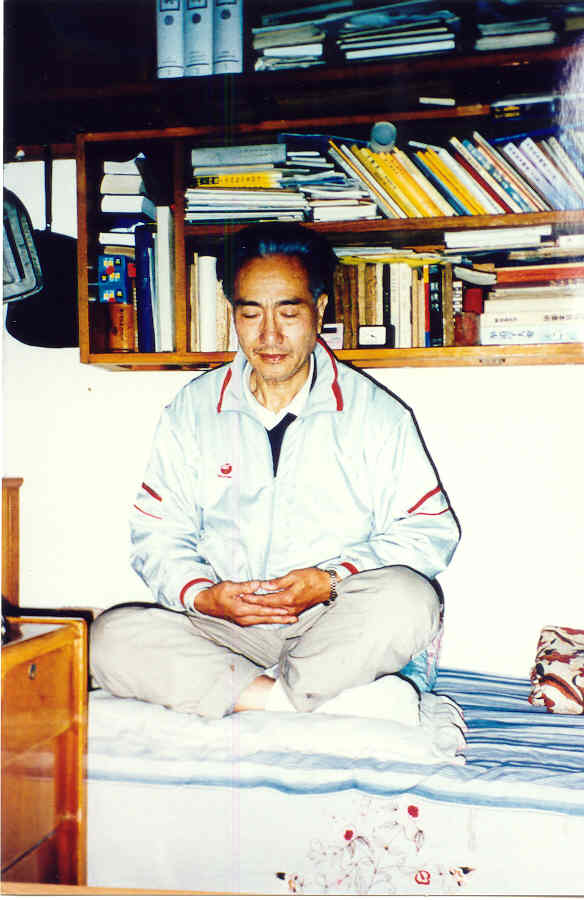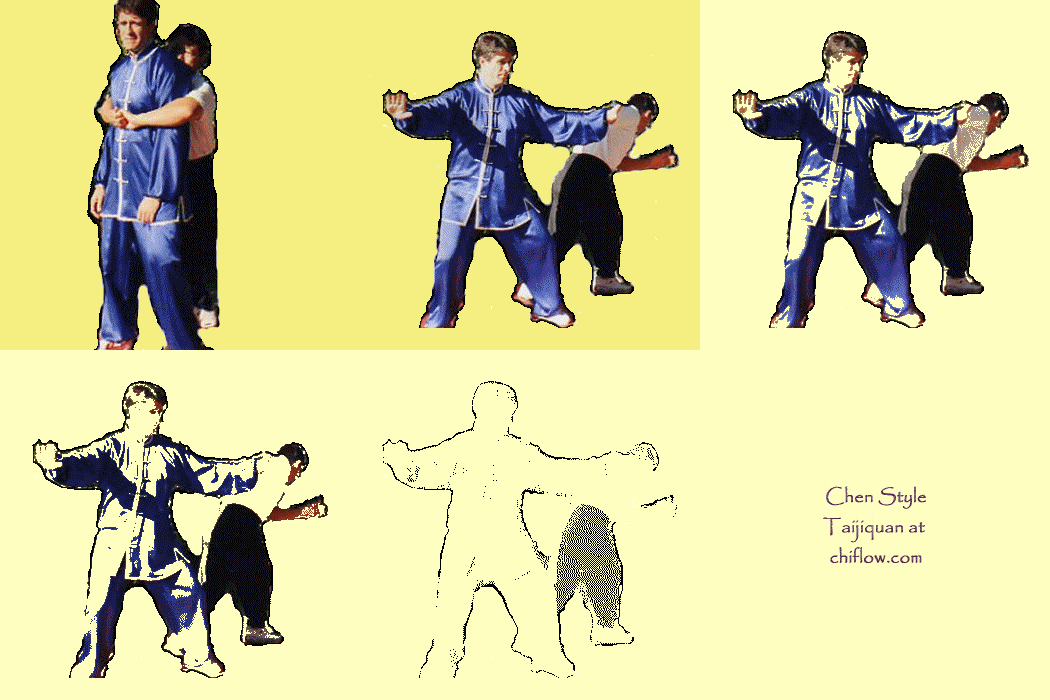
According to research of historical records conducted by Gu Liu Xin, during the mid 1500's Qi Jiguang developed a set known as 32 forms of boxing. Today sets of 80, 108 or more forms typically refer to the number of individual postures. The numbering of 32 forms in Qi's set probably had a different meaning from the one we use today. Often these older sets had one name for an entire section or set. Like the Chen set, Qi Jiguang's set started with Lazily Belting the Clothes and Single Whip. Qi Jiguang supposedly took the forms and knowledge of 16 different martial arts schools to develop this Mother form.
Chen Style Taijiquan (Tai Chi Chuan) Part 2:
The Development of Modern Chen style
by Gerald A. Sharp
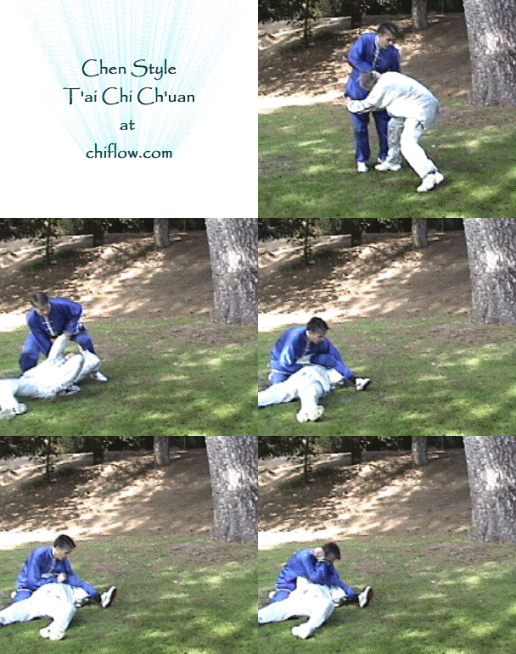
Animated Image: Gerald A. Sharp demonstrates a Chen Style "Shake Leg, Stretch Down" defense against a tackle.
Taijiquan (T'ai Chi Ch'uan) is a branch of the traditional internal martial arts (or Nei Jia Kung Fu) that spread widely in China over 300 years ago at the beginning of the Qing Dynasty. It became very popular starting around 1911 in Beijing. Stories abound about how this martial art we now call Taichichuan may have developed around the eighth century.
Modern Chen style Taijiquan
Continued From Chen style Tai Chi Chuan Part 1 and continued on Chen style Part 3.
|
1. Chen Fake - Chen style goes to Beijing
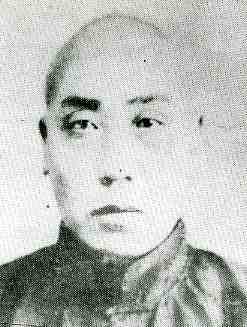
Chen Fake was initially regarded as something of a novelty in Beijing, because he was both a Chen family member and practiced the style that greatly influenced the publicly known styles' development. It was soon clear that he was much more than a mere novelty. By all accounts, Chen Fake possessed superior skills due to his skill in Push Hands and his ability to use his skill to neutralize and ward off challengers. In my opinion, those who claim to be his students, or students of his students, seem to miss even some of the most obvious aspects of Chen Fake's practice. This is exemplified by the subtle movements in his joints, especially in the extension of his elbow. Many of the practitioners who follow Chen Fake's lineage demonstrate constantly bent (or unbending) elbows that do not penetrate or twist with power whatsoever. Instead, they rely on tricks or force to carry forth some overt resemblance of power. Tricks and strength that can be rendered useless by those who understand and employ softness and ting jing (listening energy) in their application. What's questionable is the idea that Chen Fake, and later his youngest son, Chen Zhaokwei, were teaching a "new" frame. It would seem that they were both teaching efficiency and practicality. It's easy to question the idea that which is more elaborate is "old," and that which is efficient is "new." Another question about Chen Fake's legacy is how different his style is from Chen Zhaokwei's which, in my opinion, is further nonsense. When all of Fake's verifiable students, bar a mere few, and Zhaokwei's are similar; then this casts further doubt on the "old" frame, "new" frame argument. In all actuality, this may be just a way to shift attention from Fake and Zhaokwei's popularity to another Chen family member's version or interpretation of the style. Despite any diversions, Chen Fake and Chen Zhaokwei's Chen style remain the most popular to this day. |
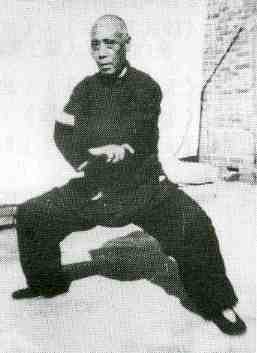
2. Gathering Energy and Emitting Force The drawings and photos of Grandmaster Fake plainly show his extension (necessary in the use of softness), yet the focus since Chen Fake (and Chen Zhaokwei for that matter) has been more on the dynamics and less on the softness; a hallmark of T'ai Chi. Usually this is presented as energy being moved from the lower dantian and emitted out through the fingers without being presented by any sort of absorption or gathering whatsoever. The point "out through the fingers" raises immediate problems from my perspective. It seems these modern day practitioners focus on what they can emit rather than on what they can gather and circulate, thus the lack of roundness in their structures as well. It further misplaces the focus on the lower dantian or the waist "leading" all movements and ignores the hands and feet which are usually positioned to lead. The true interpretation of the admonition in the Taichichuan classic of keeping the waist at the "center" of all movements is lost when the waist leads and the central equilibrium is exposed.
Picture: Chen Fake (Blue Dragon Rises) Despite the spiraling and twisting energy that the style conjures, like other styles of Taijiquan, relaxation synthesized with spiraling is key to developing listening energy and martial application skill. The power sensed during practice ought not translate into tightness. Explosive force ought not to be released when interacting with environmental energy or with others during engagement, as a means of domination but, rather, as a way to connect and interact. This makes Chen Style even more difficult to comprehend, even to long-term practitioners, and, therefore, takes more time to assimilate and embody than other styles of Taijiquan. |
|
3. Chen Zhaokwei - Joint Power
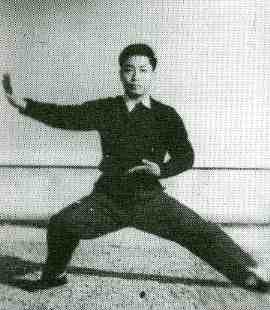
Picture : Chen Zhaokwei, "Lazy About Tying a Coat" Chen Zhaokwei is widely recognized as one of the most gifted of the Chen family practitioners of the 20th century. Pictures and drawings of Chen Zhaokwei also demonstrate a strong center of gravity and further exemplifies the extension of the elbow when issuing power. Chen Style is not about showy, external power. What made Chen Zhaokwei appear to be issuing such a show of force was the fact that the range of his punches (and elbows) were short and his circles were small. Spectacular Chen Style, (as I believe Chen Zhaokwei cultivated) is linked to the power of softness. When the joints are soft and correctly positioned, the relaxed structure can provide the power instead of with the tightening of muscles, and this power is non-taxing to the practitioner; despite appearing to be full and powerful. Chen Zhaokwei is credited with developing a so-called "New Frame", yet he and his father, Chen Fake, taught the traditional style: simple, concise, and resilient. Zhaokwei also emphasized softness, and the idea that explosive energy could come from anywhere and at any time in the form. After he taught in Beijing, he traveled all over China teaching Chen Style T'ai Chi. That, and the early comprehensive work on Chen Style by Gu Liu Xin, which featured line drawings of he and Chen Fake, added to his popularity as a practitioner and a teacher. In addition to his ability to utilize smoothness to his advantage, he was also know for his gripping and locking techniques (or Qinna). His pupils include many well known teachers and practitioners, as well as the "Four Buddha Warrior Attendants" of Chen Village: Wang Xian, Chen Xiaowang, Chen Zhenglei, and Xu Tiancai. |
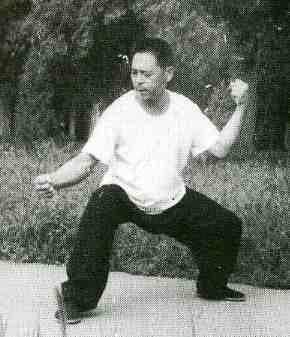
4. Feng Zhiqiang & Ma Hong - Power in Dynamics The greatest example of Chen Style dynamics I've ever seen was demonstrated by Feng Zhiqiang, a famous student of Chen Fake. In 1982, Feng demonstrated his art with other Taiji masters outside of Shanghai in Jading. Feng's power was unbelievably concealed within the softness and resiliency of his joints. When he moved, the ground shook with what seemed like both primary and secondary seismic waves. (He gathered energy and used circulation not emission.) His body appeared to me to be as soft as jelly on the outside and as hard as a diamond on the inside. Another expert in Chen Style dynamics is one of Chen Zhaokwei’s top students, Ma Hong. When he demonstrated in Handan City, Yongnian in 1993, I was amazed at his ability to emit jing and fa-jing from any posture at any time. This is contrary to what is usually demonstrated by even the most advanced Chen stylists: typically there are set places in the form where fa-jing is to be “performed.” Ma Hong has written a great amount of material on Chen Style, and his books are popular not only in China but around the world. The reputation of Chen Style has been enormously enhanced by these two illustrious masters. Their understanding of Chan Su Jing, or the combination of dynamics and softness is far beyond many students who claim lineage to either Fake or Zhaokwei. Their movement is extraordinary and can be performed without the opponent being able to sense or detect it, despite their noticeable dynamics.
Feng Zhiqiang in ”Sink Waist with Elbow Down” |
|
5. Tian Jian Hua, Tian Xiu Chen, & Gu Liu Xing - Power in Softness
There are other non-family Chen practitioners as skilled as Feng Zhiqiang, but their skill resides in their ability to use softness to conceal their strength. They are able to use "Four Ounces to Deflect a Thousand Pounds." It's unbelievable that some "masters" after years of practice, regardless of style-not only Chen-believe that a practitioner must employ some sort of hardness and force. If they cannot feel a person's force they automatically assume that the person is like tofu, and further that they are too weak. They wrongfully determine that they can use their external power to overcome them instantly. Softness is sleek yet very powerful, and can often be misunderstood as "easy to overcome." I have seen Tian Jian Hua, a younger brother of Tian Xui Chen, as well as videos of Tian Xui Chen and Gu Liu Xin, and their practice is very soft and simple. All three of these great men were students of Chen Fake. However, despite their light quality (or in lieu of it) they would easily dispatch such external "masters" out of their shoes. I honestly believe that while Gu Liu Xin and Tian Xui Chen received a pure transmission from Chen Fake (as outlined in their books on Chen Style). Tian Jian Hua, Tian Xui Chen's brother, cultivated and internalized the smoothness of the style like no other of Fake's non-family students. I have never seen a greater dedication to smoothness, and Tian Jian Hua's practice brings the stories of Chen Fake's sleek quality (and subtle explosiveness) to life. It should be noted, that Gu Liu Xin wrote the most authentic (and most detailed) books on Chen Style, while Tian Xiu Chen co-authored an authoritative book on Chen Straight Sword with Zhou Pei Feng, daughter of Zhou Yuan Long.
|
6. Zhou Yuan Long Zhou Yuan Long, who drew the now mass produced drawings of Chen Fake and his own teacher, Chen Zhaokwei, was also a skilled Chen stylist. While he wasn't as dynamic as Feng (he was light though) he emphasized combining dynamics and softness. Zhou made quite a splash when he was sponsored to visit San Francisco in the 1980's. While there his sponsor, who practices at Spreckles Lake in Golden Gate Park, tried to "get" Zhou. At one point, trying to fend off embarrassment, the sponsor grabbed Zhou's silk suit and twisted the fabric tightly in an attempt to control him. Zhou used the "shaking off" energy which Chen style is famous for to send his sponsor reeling. Luckily local Japanese reporters were on hand to both photograph and report the event that particular day.
Above: Gerald Sharp with Chen style Teacher Zhou Yuan Long practicing the transition to "Sweeping Leg" from Chen Style's Canon Fist in West Lake Park, Hangzhou, China. One of the greatest things I picked up from Zhou was the softness of the style. He was extremely critical of any tightness whatsoever. However, honestly, for me, it took me years to appreciate not only Chen Style, but any style of T'ai Chi. It took learning about the subtlety of Wu Style (as well as standing in Zhuangzhang) to help me ascertain what it means to utilize power in softness. Because of Wu's lack of movement, by comparison, I was able to see that any overt movement needed to be even softer, if it was to be effective. Another thing that I learned was the importance of Zhong Ding (or central equilibrium). Some Chen stylists, even top teachers, will compromise their center of gravity for perceived leverage or position, when in fact, straightness doesn't need to be compromised when spiraling. On the contrary, relaxation of the joints, with spiraling, can be all the more powerful, if Zhong Ding is maintained. With Zhong Ding, spiraling can be used to connect the central with the peripheral nervous systems, and define motion within stillness and vice-a-versa with the least amount of effort and force. All the while, flowing the chi from up to down, out to in, and back again with the most efficient of movements. While I was able to absorb Zhou's teachings, at the time, I was too hypnotized by what I saw on the outside. I created a learning curve that wasn't necessary, but I had to see the magic, hold it. However, Chen Style's magic, like other styles of T'ai Chi, is more about what we don't do, what we don't hold. Years hence, I appreciate Chan Su Jing that is intrinsic and covert. It's not only harder to detect and neutralize, but it's also better for storing the energy conjured from practice. |
|
7. Mastering Chen Style Below: The late Zhou Yuan Long (Who may be best known for his drawings of Chen Zhao Kwei, Chen Fake, Yang Cheng Fu, Wu Jianquan, Hao Shao Ru, Jiang Rong Qiao, and many others).
As with any style of Taijiquan, "mastering" is not a goal worth pursuing. You cannot master something that depends on how much you can let go of it. I'd say becoming "proficient" would be a better choice of words, and that can only come through time for most of us. Chen Style Taijiquan requires a great deal of fortitude, patience, and softness. It's a mistake to think that once you sense the power of Taijiquan - and can harness and externalize it - that you are proficient in the style. It's an even greater mistake to discover Chan Su Jing, and because you can twist about, think that you possess an iron shirt (or internal strength). It is best to avoid relying on versions of the style that were developed for competition and show, as they are meant for just that and will unlikely provide the foundation for developing long term benefits and the sense of adhering, the value of softness, and an understanding of the audible force that is trained in the Push Hands that is central to all T'ai Chi styles. In closing, it was an honor to learn Chen Style T'ai Chi from Teacher Zhou Yuan Long and his younger brother, Zhou Yuan Jun, as well as K.C. Hom and, without question, Cheng Jie Feng. Each of them had/has a take on Chen Style, that while it follows the traditional set, is truly their own. I have to say Cheng Jie Feng is an amazing teacher whose research and practice of the various ancient and modern versions of Chen Style (and many other internal arts) is unparalleled. |
8. Other Tai Chi Chuan Links on chiflow.com
Animated Image: Gerald A. Sharp demonstrates Chen Style's ”Step Back, Whirl Arms” (Repulse the Monkey) to defend a rear attack.
|